
ONLINE ISSUE
June 2015
Inside This Issue
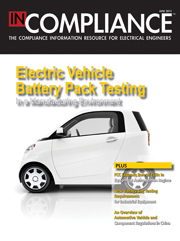
EV Battery Pack Testing in a Manufacturing Environment

Electric vehicles (EVs) are clearly becoming a growing part of the automotive scene. They...
View from the Chalkboard
I would like to thank all those that took time to submit their comments in...
Happy Birthday, National Broadband Plan!

Blow out the candles, already! The recent auction of Advanced Wireless Spectrum raised $41...
An Overview of Automotive Vehicle and Component Regulations in China
Recent Changes Expand Testing Requirements
The market for automotive vehicles is growing rapidly in China,...
- From Our Sponsors -
New Voltage Sag Testing Requirements for Industrial Equipment
Power Quality Monitoring is Migrating to the Product Level
Immunity from voltage sags is vital...
FCC Expands Role of TCBs in Equipment Authorization Regime
Changes May Speed Market Access, but Testing Challenges Remain
Just before the end of 2014,...
Selecting a Fuse Value

Product Safety Newsletter - May/June 1990
Recently, a colleague asked, “How do I select the...
Featured in the Technical Library
Loading issues...
Discover new products, review technical whitepapers, read the latest compliance news, and check out trending engineering news.
Get our email updates
