ONLINE ISSUE
April 2015
Inside This Issue
Understanding Symbols: Static Electricity Hazards

One of the critical building blocks for your product safety labels is symbols.
This month,...
ESD Standards: An Annual Progress Report

Industry standards play a major role in providing meaningful metrics and common procedures that...
The Turtle Method of Selecting EMC Commercial Test Software
Over the last few years it has become evident to me that there is...
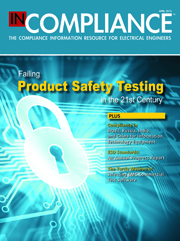
Failing Product Safety Testing in the 21st Century
Even though safety is second nature to electrical product designers, testing laboratories still see...
- From Our Sponsors -
Compliance in Brazil, Russia, India, and China for Information Technology Equipment
“Exploration is the engine that drives innovation. Innovation drives economic growth. So let’s all...
The Effect of the FCC’s New Rules on Testing Laboratories
The Federal Communication Commission (FCC) ended 2014 with an overhaul of its Rules for...
Featured in the Technical Library
Loading issues...
Discover new products, review technical whitepapers, read the latest compliance news, and check out trending engineering news.
Get our email updates
